
Landing the Job of a Lifetime: 5 Tips to Build a Career in Environmental Fields
Emily Kane, the Director of Career Services, Georgetown’s Master of Science in Environment & Sustainability Management, has spent 15+ years in higher education and career services helping students grow and achieve their goals. Here are her tips for building a meaningful climate-based career.
Climate change is changing everything. So when people ask me about careers in the environmental space, I believe you should follow your passion. At the same time, you should build skills that address today’s rapidly changing job market while also preparing you for the future. One change in the market is the rapid growth in demand for green skills. This calls for a new generation of leaders with environmental fluency at their core who can work across silos.
The growth in this area is easy to overlook, considering variable support for certain environmental initiatives, such as policy shifts, funding changes, and competing priorities. But the reality is that this work isn’t going anywhere: according to the LinkedIn Green Skills Report published in 2025, demand for talent with green skills—skills that directly address climate change, such as energy management—is increasing at twice the rate of available workers with those skills.
If anything, environmental training is becoming more embedded in how industries, governments, and communities need to operate, because climate change and environmental realities are key to maintaining public health, supply chains, food supplies, international security, and recovering from climate extremes.
The opportunity now is to prepare people to enter the field and land roles where they can make a difference. I believe this work is important, which is why I want to share my five tips for launching your dream career in contributing to the world’s environmental and sustainability solutions.
1. Show how your experience bridges classroom and hands-on training
Employers want to see a mix of theoretical training and real-world experience. Neither is enough on its own, which is why I recommend seeking degree programs that focus on experiential learning.
Internships, fellowships, fieldwork, capstones, conferences, research projects…This is where you learn how to apply what you’ve learned in the classroom, address real issues, and demonstrate the kind of value employers are looking for in both your resume and your interview.
These experiences also give you opportunities to quantify your successes: what were the outcomes of your capstone project? How many company practices did you analyze? How large a geographic area did you study? How many communities did you work with, how many surveys did you analyze, and who mentored you along the way? All of these deserve prominent spaces on your resume!
2. Build expertise, but don’t skimp on broad foundations
I see students struggle when they don’t play to what makes them stand out to employers. A broad foundation with a passionate, well-honed interest in where you want to make an impact can bring you to the top of the applicant pool.
First, specificity matters. The students who move forward fastest are the ones who can clearly say what they want to work on—let’s say, decarbonization, supply chains, climate finance, environmental health, or something else—and back it up by demonstrating their relevant training. Having clarity on where you want to make an impact helps you understand exactly where you can add value to an employer while fulfilling your own career goals in a way that’s meaningful and engaging for you.

“The MS-EIA program gave me the flexibility to dive into my own areas of interest, specifically nuclear energy and international energy security…At the same time, it surrounded me with expert faculty who were able to understand my interests and career goals.”
Jeremiah Cutright (MS in Environment & International Affairs’ 25), NGFP Fellow, Department of Energy/Pacific Northwest National LabSecond, you can stand out by demonstrating your analytical skills and theoretical knowledge through a STEM degree that includes foundational coursework in environmental science.
Imagine how differently your interview will go when you can walk the walk with the basics and talk the talk with your own expertise and interest areas.
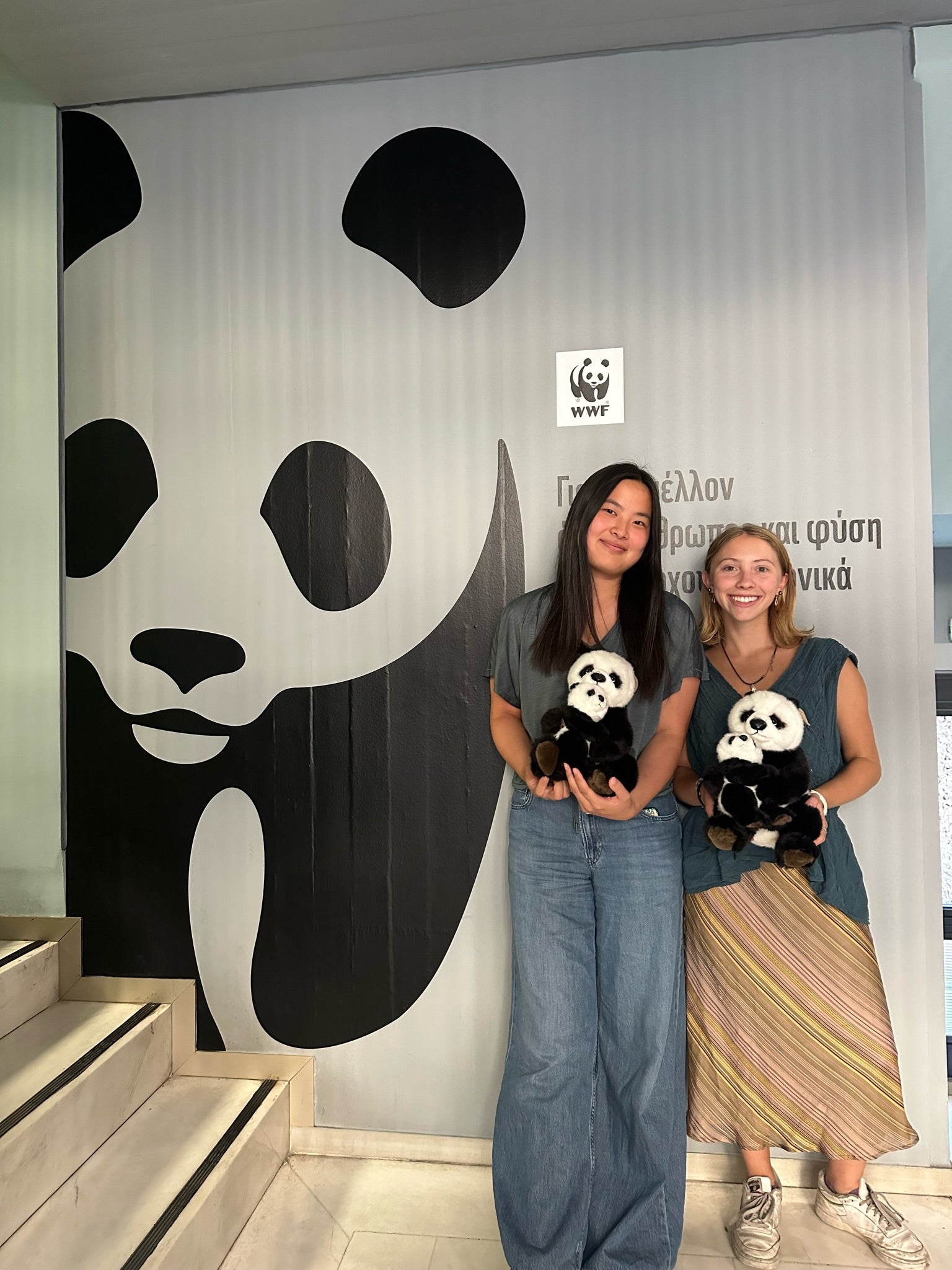
“[I feel] affirmed in my desire to pursue a career in the environmental sector knowing that there are still people across the world fighting for our planet—and that I can contribute to this impact.”
– Megan Lu (BS in Environment & Sustainability ’28)3. How to stand out in the age of AI
The widespread use of AI-powered resume screening tools comes alongside platforms that allow applicants to submit resumes to job boards from anywhere and with a click of a button.
To make sure you stand out, as an applicant, stand out, make sure your resume highlights the in-demand skills employers are seeking—using the same language they use. A good place to start finding this language is to reference the job description for your dream role and work it into your resume, but don’t reproduce it word for word. Your resume needs to be your own voice and stay true to the work you did in a professional experience.
Research and technical skills, such as R programming and interpreting complex graphs and datasets, have allowed me to contribute as an expert early in my career.
Miriam Pineda-Gonzalez (MS in Environment & International Affairs ’25), Energy and Environment Analyst, International Technology and Trade Associates, Inc.
Demonstrate a mix of soft and hard skills. In terms of trends we’re seeing in the marketplace, a couple of key terms you might include (if they apply to your training) are “stakeholder engagement”, “green transitions”, “environmental stewardship”, and “systems thinking”. Consider pairing these with “leadership” and “attention to detail”.
There are also tips to make sure your resume is legible to screen readers: keep it visually simple, one-column format; use short, clear sentences that demonstrate what you did in the job and the impact you made. We recommend formatting a bullet point using the P-A-R format. Start with a strong action word (A), state what problem or project you tackled (P), and state the result.
Whenever you can, make sure your resume (and tailored cover letter!) land in the hands of a champion within an organization where you see an opportunity. That brings me to the next point: building your network.
4. Build a future-focused network
Alumni groups, faculty mentors, and professional communities play a huge role in helping you land your dream career. You will not only find opportunities and build your network: you will better understand how environmental concerns operate in the real world, what skills are actually valued, and where trends are shifting.

We’re practiced at being each other’s thought partners, cheerleaders, and co-workers, and I hope to continue to tap into this network for the rest of my career.
Brittany Gallahan (MS in Environment & Sustainability Management ’24)The job market moves fast, and the environmental space is no exception. Staying informed about policy changes, market shifts, and new technologies is critical to staying competitive, and your network, on top of your training, will keep you in the know.
Once you identify the professional space(s) where you may want to work, look up organizations working in those spaces and start building connections with people at those organizations who are doing the work you want to do. Reach out to those professionals and ask for short informational conversations. 15 or 20 minutes can go a long way. The same goes for investing in relationships with your classmates, though you might already be lifelong friends by this point!
5. Take advantage of being at a top university
There are many things that Georgetown University offers that you can’t get at other institutions, so make sure you take advantage of being here. Our faculty are truly experts in their fields who connect interdisciplinary scholarship with industry experience and with partner organizations, such as the World Resources Institute, the United Nations, and Capitol Hill. These faculty can become your mentors, and mentors can shape your life.

Every time a guest speaker comes to the school, you have an opportunity to speak to someone who is in a position you wish to be in one day and learn from them.
Anders Croft (Master of Science in Environment & Sustainability Management ’24)Apart from top-notch academics, there’s also the access—to Washington DC, to employers shaping global environmental work, and real-world opportunities that can inform your career before you even graduate. Your time at Georgetown is your chance to develop professionally and personally, so I encourage people to attend the amazing interdisciplinary environmental events at Georgetown’s Earth Commons Institute (think: author talks, film screenings, festivals, and lectures).
The incredible network of Georgetown alumni and peer mentors can take your calls, offer guidance, and open doors, as well as your career coaches in career services! We offer career coaching, career-readiness workshops and events, and access to job boards, employers, and platforms to help you prepare for the job search, including crafting an impactful resume.
Looking Ahead…Way Ahead
The environmental field is evolving, but the need for people to contribute in diverse ways isn’t going away. In the World Economic Forum’s 2025 Future of Jobs report, environmental stewardship is described as an emerging skill set that employers are expected to increasingly need. That’s the key: look ahead, stay connected, and stay relevant to the job market
There’s a huge opportunity here for you to make your mark and do something for the common good. Congratulations on taking the next step!
Explore More

MS in Climate, Environment & Health
Apply Now
MS in Climate, Environment & Health
Explore the degree
MS in Environment & Sustainability Management
Apply Now
More Careers Stories
Explore all Careers StoriesAll, Capitol Campus, University Stories
Landing the Job of a Lifetime: 5 Tips to Build a Career in Environmental Fields
Emily Kane, the Director of Career Services, Georgetown’s Master of Science in Environment & Sustainability Management, has spent 15+ years in higher education and career services helping…
March 26, 2026

All, Announcements, Capitol Campus
March 10, 2026
All, Announcements, Intern Dispatches, International, University Stories
The Intern Dispatches: A Sanctuary for Wildlife and Reflection in Greece
December 13, 2025
All, Intern Dispatches, International, University Stories
The Intern Dispatches: Inside Two Months with the World Wildlife Foundation Greece
October 27, 2025