Center for Environmental Justice
The Center for Environmental Justice seeks to enhance and elevate multidisciplinary, interdisciplinary, and transdisciplinary initiatives that prioritize diverse perspectives to advance environmental justice scholarship and culture throughout the university—and beyond.
Formerly the Georgetown Environmental Justice Program, the Center for Environmental Justice at Georgetown University was established in 2021, inspired by the encyclical Laudato Si’, to serve as a bridge between Georgetown’s work in ethics and its commitment to environment and sustainability. The program is now evolving to reflect its new role within the Earth Commons, Georgetown’s Institute for Environment and Sustainability.
The Center is a founding member of the Emergent Ethics Network, a groundbreaking initiative bringing together a cross-campus community of scholars and students addressing ethical issues crossing the disciplines of bioethics, environmental justice, and digital ethics. The Network includes the Kennedy Institute of Ethics, the Pellegrino Center for Clinical Bioethics, and the Center for Digital Ethics—and builds on Georgetown’s legacy of innovative work in practical ethics.
The Center for Environmental Justice embraces the belief that no single discipline can fully address the complexities of environmental justice. As such, the Center seeks to elevate multidisciplinary, interdisciplinary, and transdisciplinary initiatives that prioritize diverse perspectives to advance environmental justice scholarship and culture throughout the university—and beyond.
Announcements
The Center for Environmental Justice welcomes its new director, David Bond, in August 2026.

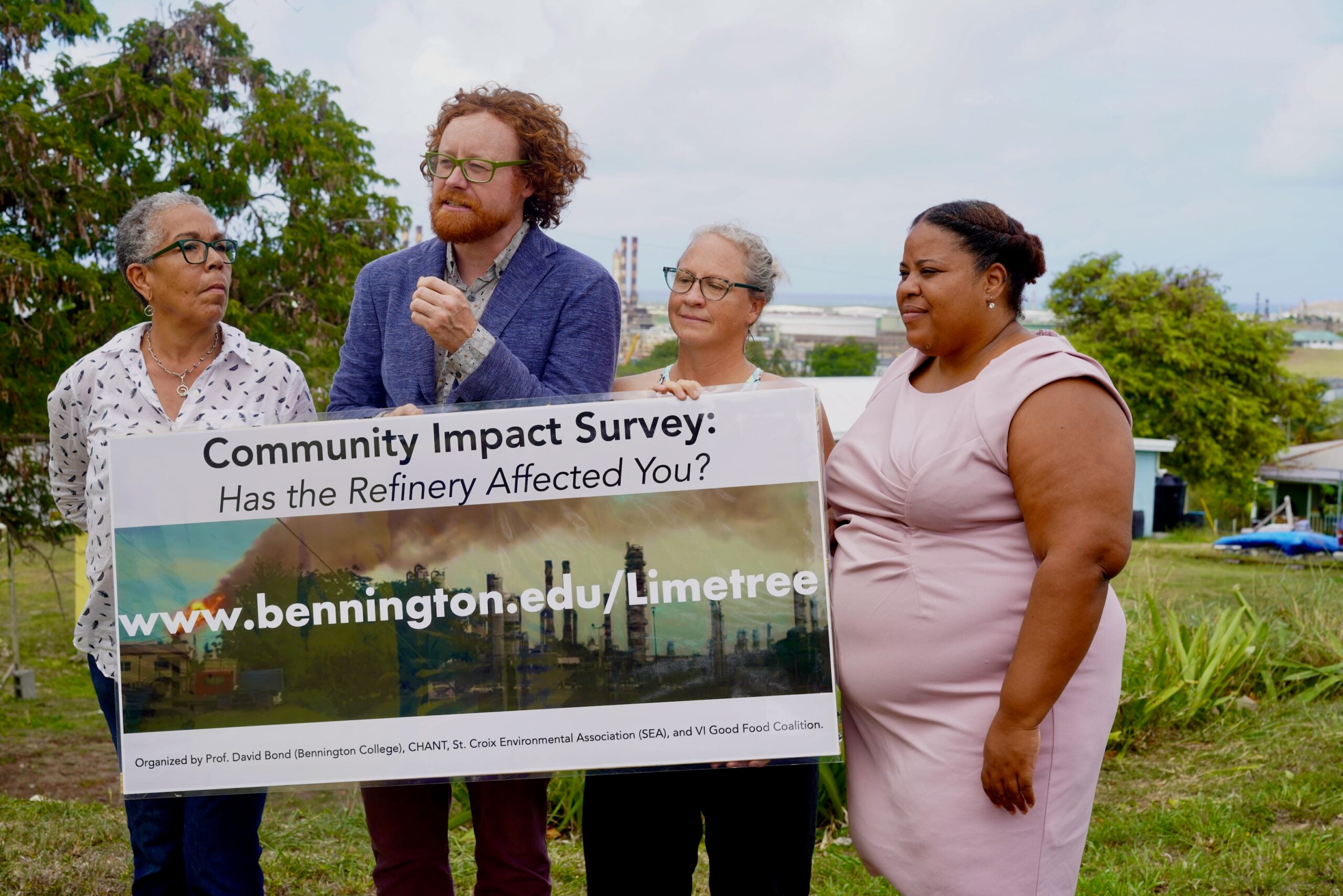
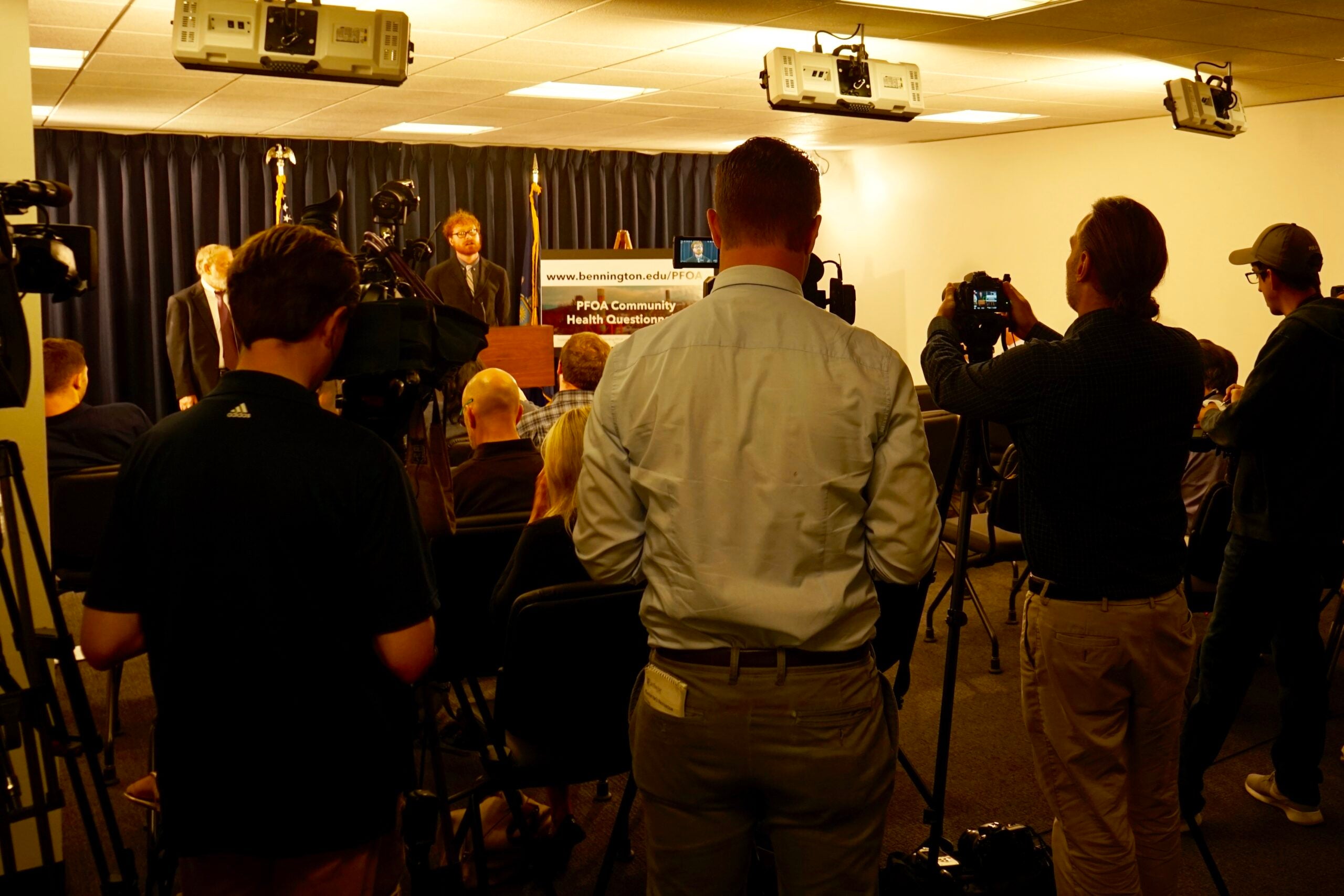
David Bond is a cultural anthropologist whose ethnographic research and public engagements aim to dismantle the imperial, epistemic, and altogether catastrophic reign of petro-capitalism. In historical excavations of the environmental racism that exempts oil refineries from pollution controls by dint of their colonial location in the American Caribbean, in fieldwork on how environmental protections often encase fossil fuel infrastructure in impenetrable ethics, and in collaborative campaigns with frontline communities to publicize corporate maleficence and prosecute polluters, Bond’s work strives to hold the empire of oil accountable for its profitable destruction of our planet while making room for radical alternatives inside the classroom and impacted communities. Our world is entering a new epoch of induced upheaval. So many communities battered by the poisonous reach of petrochemicals and climactic fallout of fossil fuels are eager for bold explanations of what is happening, who is responsible, and what alternatives are within reach. In response, Bond’s scholarship insists on the relevance of anthropology to: 1) craft cogent accounts of environmental disruptions that exceed disciplined knowledge and institutional jurisdiction; 2) recognize unhinged catastrophe without giving up on justice in the here and now, and 3) insist on the ability of ethnography to build common ground in an age of ecological upheaval and economic decline. In 2022, Bond was awarded the “New Directions Prize for Public Anthropology” by the American Anthropological Association.
Bond received his PhD in Cultural Anthropology from the New School for Social Research in 2013. With generous support from the American Council of Learned Societies (ACLS), the Mellon Foundation , the National Science Foundation, Wenner Gren, and others, Bond’s research routinely forms the basis of press releases, draft legislation, opinion pieces for small-town newspapers, and essays for flagship anthropology journals. Engaging questions of materiality, toxicity, empire, and critique. Bond’s scholarship has been published in leading journals such as American Ethnologist, Comparative Studies in Society and History, Cultural Anthropology, and Radical History Review, and he serves on the editorial board of AE and Current Anthropology. Bond’s work has been featured in Bloomberg News, the Guardian, Inside Climate News, The Intercept, Politico, the Wall Street Journal, and the Washington Post, among other news outlets.
Bond’s first book, Negative Ecologies: Fossil Fuels and the Discovery of the Environment, argues that most of what we know of clean air, clean water, and now a stable climate in the United States emerged in the wake of fossil fueled disasters. Yet the resulting environmental science and policy never faced up to these disasters directly, instead working to manage the effects as a separate matter of concern. The environment, in other words, has not so much provided an effective counterweight to the American addiction to oil so much as it provided the acceptable parameters for that addiction to deepen and spread. The American Anthropology Association (AAA) awarded Negative Ecologies the Robert Textor Prize for Anticipatory Anthropology in 2024.
Bond was Member of the School of Social Sciences at the Institute for Advanced Study (IAS) in Princeton 2018-19 for the theme “Crisis and Critique” (organized by Didier Fassin and Axel Honneth). Bond was also an invited Visitor at IAS 2022-23 for the theme “Climate Crisis Politics” (organized by Wendy Brown and Timothy Mitchell). He also holds an affiliation with the Gund Institute for Environment at the University of Vermont (UVM).
Bond taught at BenningtonCollege from 2013-2026. He also served as the Associate Director of the Center for the Advancement of Public Action from 2016-2026, and helped found the Prison Education Initiative (PEI) in 2015 with Annabel Davis-Goff. Many of his students have secured jobs with leading environmental justice organizations or gained admissions to top graduate anthropology programs in the United States and Europe.
Environmental justice embraces the principle that all communities are entitled to equal protection of our housing, transportation, employment, and transportation energy. And so it’s a concept that’s rolled in equal protection, equal access, equal enforcement.
Robert D. Bullard
Events
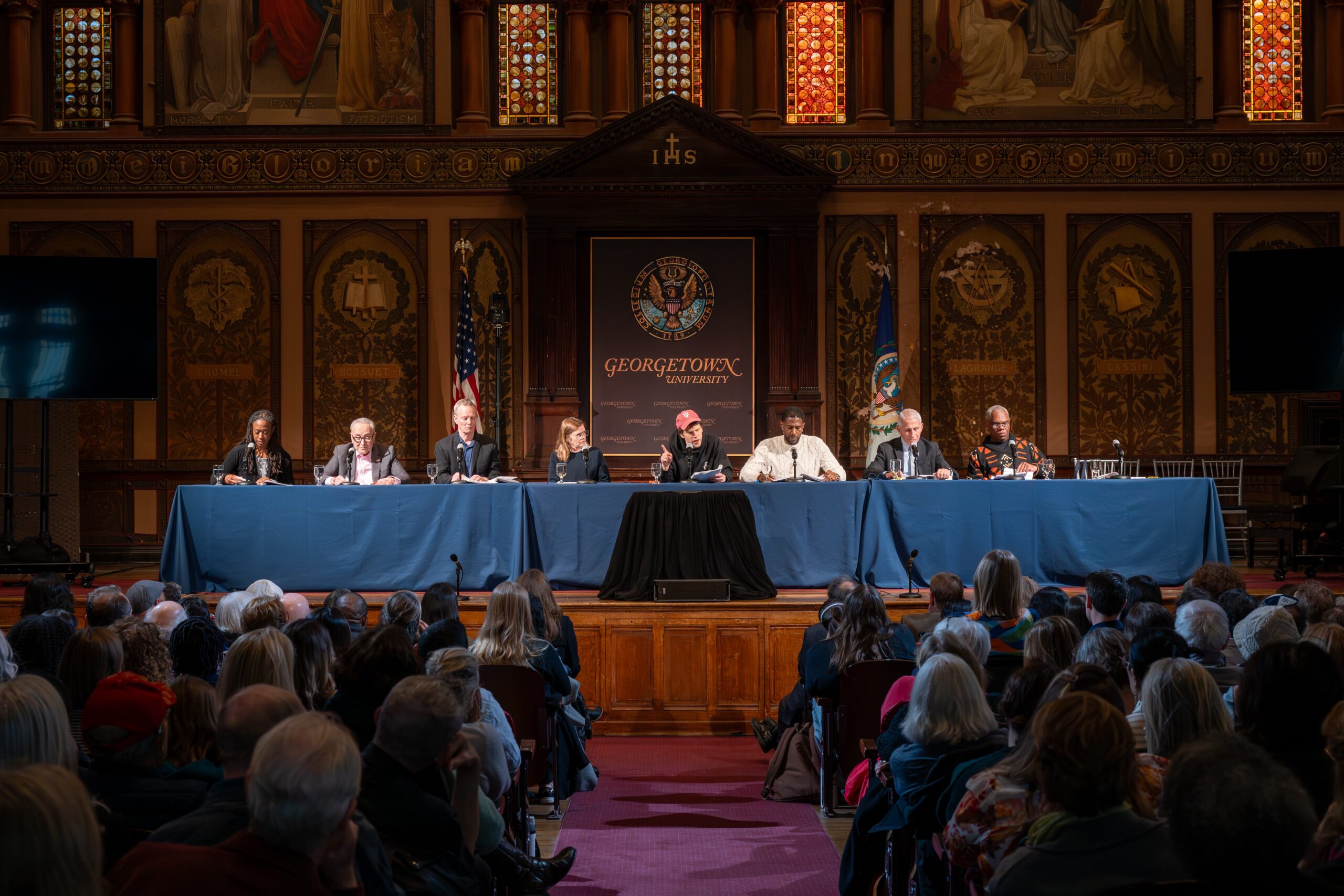
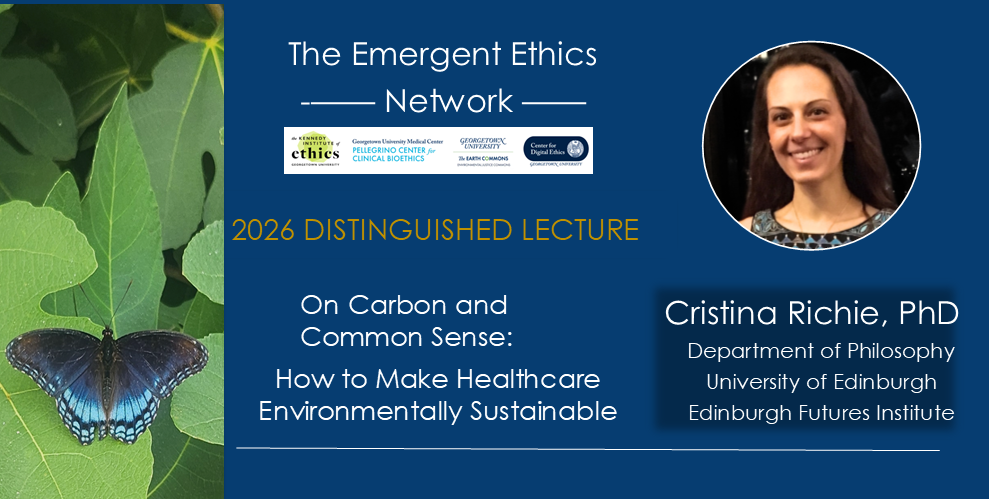
On April 8, 2026, the second annual Emergent Ethics Network Distinguished Lecture featured scholar of green bioethics Cristina Richie, PhD and respondent Jason Farr, PhD
Affiliated Initiatives
The Center for Environmental Justice is part of the Emergent Ethics Network at Georgetown.

Environmental Justice Scholars
Teaching Professor, and Director of the Environmental Studies Program (ENST) and co- Director of the Joint Program in Environment and Sustainability (JESP)
Co-Director, Environment & Sustainability Program
Professor
Earth Commons and Department of Sociology
Assistant Teaching Professor
Edward and Carole Walter Professor of Law | Director

Associate Professor of Law
Adjunct Lecturer
Professorial Lecturer – Department of Theology
Senior Climate Research Fellow – Georgetown Institute for Women, Peace & Security Justice and Institute for the Study of Int’l Migration, School of Foreign Service
Assistant Teaching Professor
Professor
Associate Professor
Adjunct Professor of Law
Main Campus Assigned Relationship
Associate Professor
Professor