Who We Are
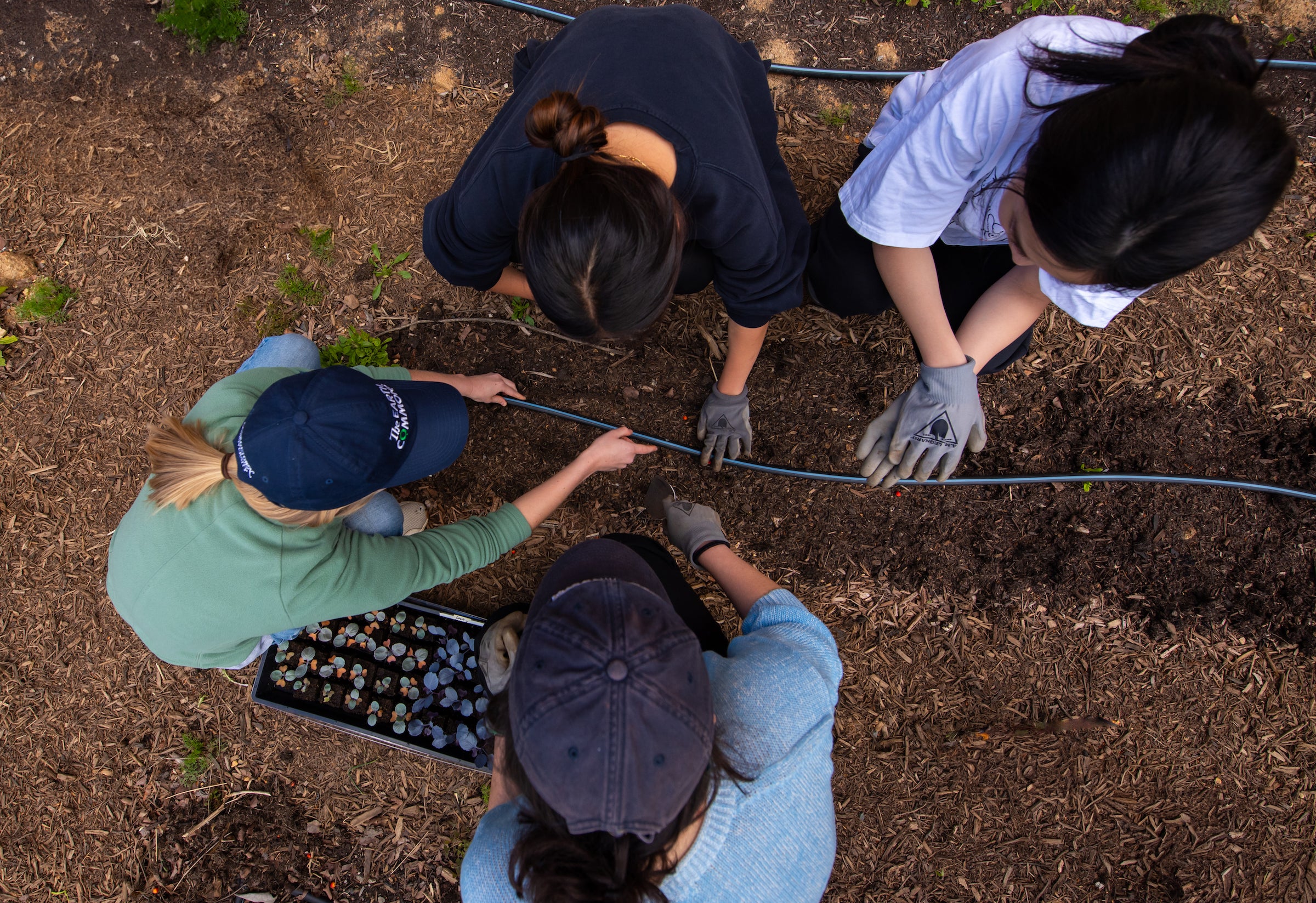
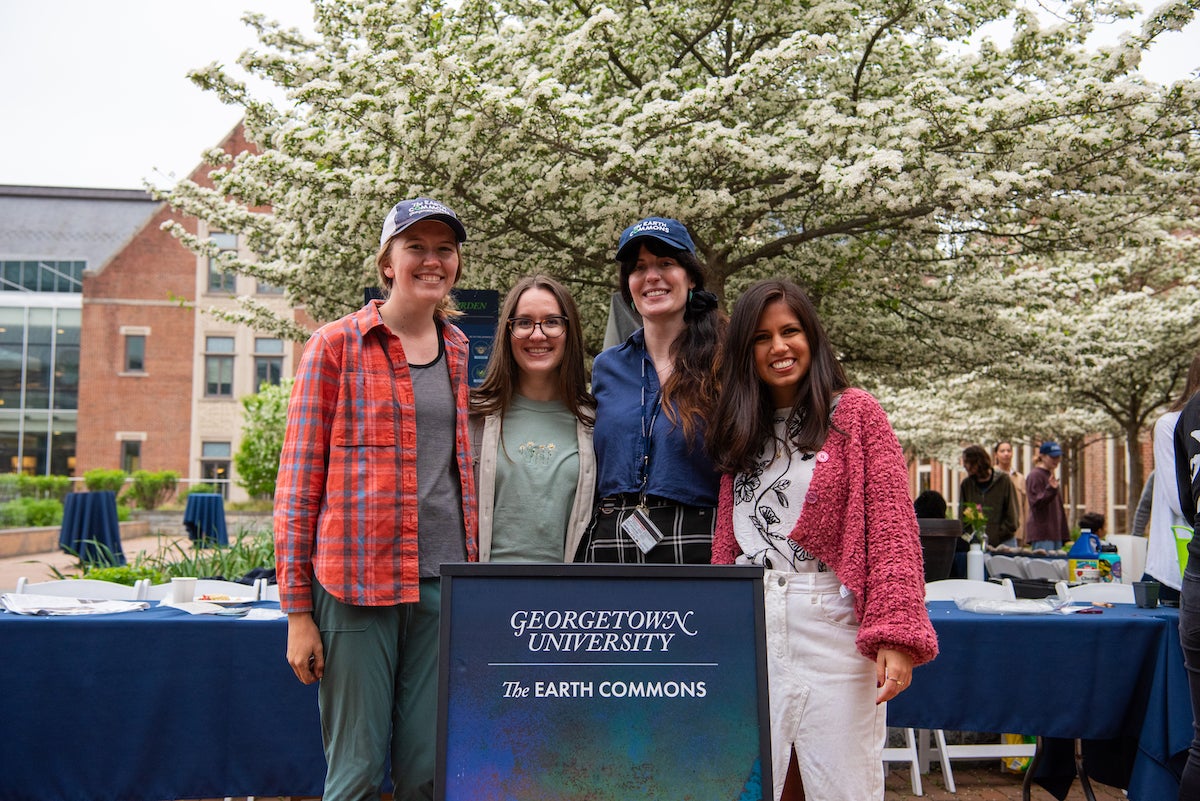
Our team comes from diverse backgrounds and from countries around the world, and each of us is committed to weaving the green into Georgetown’s signature blue and gray.
Meet the team
The Earth Commons—Georgetown University’s Institute for Environment & Sustainability— advances interdisciplinary research, education, and action to address the world’s most pressing environmental challenges.
Through academic programs that blend scientific grounding, interdisciplinarity, experiential learning, and global partnerships, the Earth Commons empowers faculty, students and fellows to lead across science, policy, business, health, and international affairs. Its joint degree programs include the Bachelor of Science in Environment & Sustainability; the Master of Science in Environment & Sustainability Management; the Master of Science in Environment & International Affairs; and the Master of Science in Climate, Environment & Health.
The Earth Commons is distinguished by its Washington, DC location, global immersions, experiential learning model, and interdisciplinary approach integrating environmental science with policy, international affairs, business, health, justice, ethics, and the humanities. Students move between classrooms, across Georgetown schools, into field research, internships, policy environments, and global experiences, and emerge equipped with the experience and endurance required to tackle the rapidly changing issues facing our planet.
The Earth Commons has developed a unique model for building environmental expertise across the university and across disciplines rather than within a single academic silo. This pan-institutional model draws on Georgetown’s strengths in science, international affairs, policy, business, health, humanities, justice, ethics, and the humanities. Joint degree programs with the College of Arts & Sciences, School of Foreign Service, McDonough School of Business, and School of Health make these connections central rather than peripheral. This model allows students and faculty to approach emerging challenges from multiple perspectives, for example, examining AI simultaneously through its impacts on energy and water demand, climate, infrastructure, markets, policy, ethics, and communities.
Georgetown adds a distinctive dimension to environmental education: a centuries-long institutional Jesuit commitment to justice, ethics, stewardship, service, and the common good. This moves the conversation beyond mere technique to consider the social, cultural, and spiritual aspects of environmental challenges and possibilities more closely. The result is an approach that considers what environmental interventions are possible while weighing who benefits, who bears the costs, and what constitutes just and durable solutions as we develop the tools to enact robust change.
From its Hilltop and Capitol Campus locations, students and faculty have unparalleled proximity and access to environmental decision-making, with the opportunity to observe diverse theories of change in action across government and embassies, international NGOs, and corporations in and beyond Washington, DC. Students combine interdisciplinary training and grounding in core environmental topics with policy coursework, internships in government and NGOs, and direct engagement with environmental decision-makers. Faculty use these same connections to build research partnerships, bring interdisciplinary expertise into policy conversations, engage directly with decision-makers and lead convenings, and move research beyond publication toward real-world environmental leadership.
Whereas many institutions focus on studying abroad, we emphasize these experiences as immersions that provide mutually beneficial opportunities for students to work with communities and Earth Commons hubs around the world. Courses and internships are paired with faculty research engagements in DC and around the world, ranging from conducting biodiversity monitoring in the Peruvian Amazon, to engaging local communities in sustainability in the Yucatán Peninsula, to assessing climate adaptation initiatives in Greece, conducting marine field research off the coast of Florida, policy internships in Washington, international capstone research projects, and engagement with international corporations, COPs and UN environmental negotiations.
Addressing environmental issues requires resilience, adaptability, agency, and stamina to remain engaged over the course of a career. Through coursework, reflection, mentorship, peer leadership, community engagement, and connection with the natural world, Earth Commons programs cultivate a sense of hope, agency, and ecological belonging. This commitment to personal formation prepares students to embrace meeting today’s challenges and builds their capacity to address tomorrow’s emerging issues.
Since 2022, the Earth Commons has already established five degrees, developed learning experiences across four continents, and built an interdisciplinary faculty and partnership network across Georgetown. By May, the Earth Commons will have graduated nearly 400 students. The larger ambition is to build on this foundation to create a School of the Environment in the nation’s capital, a permanent institution dedicated to contributing environmental leaders and scholarship that works at the disciplinary intersections of the world’s most pressing issues. A dedicated school would allow the Earth Commons to solidify its presence among the pillars of Georgetown’s identity and provide students and faculty with a strong foundation in terms of their trajectory over time—from prospective applicants to successful professionals to impactful leaders.
Our team comes from diverse backgrounds and from countries around the world, and each of us is committed to weaving the green into Georgetown’s signature blue and gray.
Meet the team